
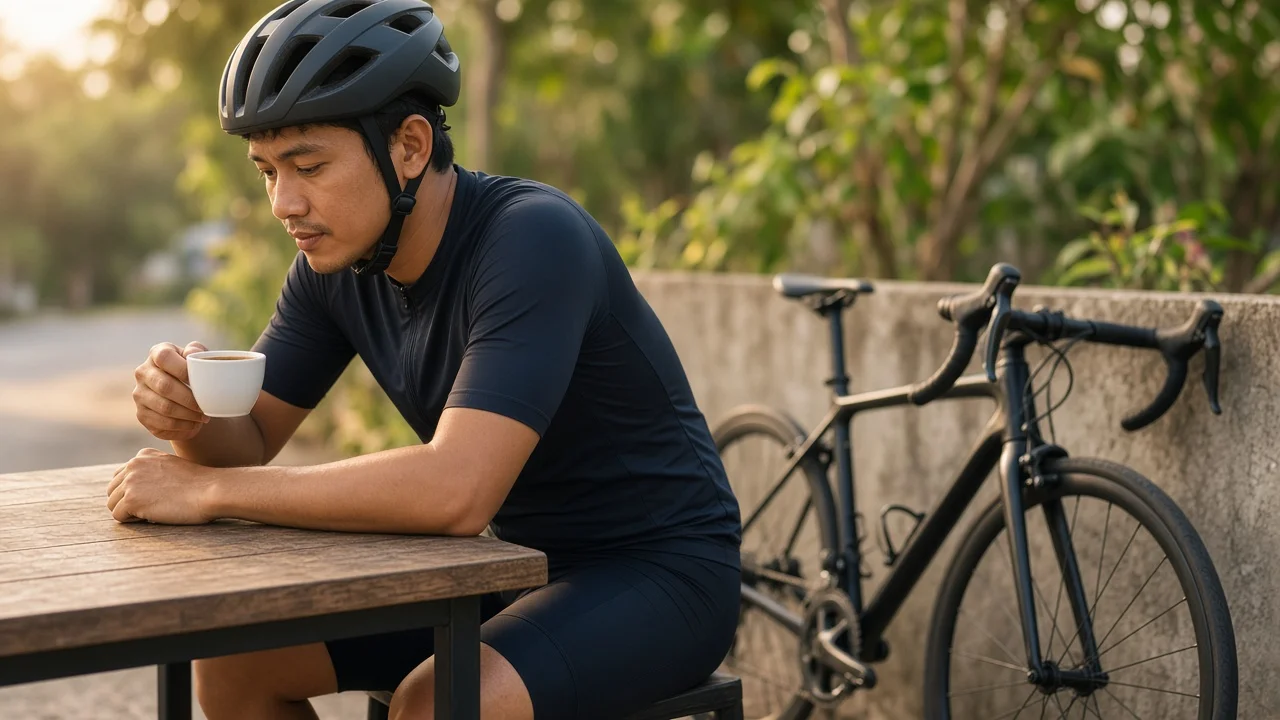
A cup of coffee before the game. Caffeine gum in a jersey pocket. A can of something in the locker room. Caffeine is probably the most widely used performance aid in sports, and it comes with plenty of folklore: more is better, it's basically doping, you can't perform without it.
This guide is for athletes in any sport (basketball, cycling, running, swimming, rowing, soccer, lacrosse, tennis) and for the coaches, strength staff and dietitians who work with them. It sums up what the major position stands and the newest research say about caffeine for athletes: the doses used in studies, when to take it, what the placebo research shows, and where caffeine stands in anti-doping. It isn't a prescription. How you respond to caffeine depends on your body, your health and your habits, and that conversation belongs with a physician or a registered dietitian.
The short answer
- It works, but not the same for everyone. The International Society of Sports Nutrition says caffeine improves several aspects of exercise performance in many, but not all, studies (ISSN, 2021).
- Doses studied: 3 to 6 mg per kilogram of body mass consistently improves performance, per the ISSN. The minimal effective dose is unclear and may be as low as about 2 mg/kg.
- More isn't better. Very high doses, such as 9 mg/kg, come with a high rate of side effects and don't seem necessary.
- Timing: the most common protocol in research is about 60 minutes before exercise. Caffeine gum may need less lead time.
- Anti-doping: caffeine is not prohibited by the World Anti-Doping Agency. It's on WADA's Monitoring Program, which is a different thing. College athletes have an extra layer to check (more below).
What the research says
The ISSN position stand (2021). This is the most cited document on the topic. It describes small to moderate benefits for muscular endurance, movement velocity, strength, sprinting, jumping, throwing and a wide range of sport-specific actions. The most consistent effects show up in aerobic endurance, though the size of the effect varies between people. One thing to keep in mind: several authors disclose ties to supplement companies, and the ISSN itself has received grants from companies that sell caffeine products.
The International Olympic Committee (2018). In its consensus statement on supplements, the IOC lists caffeine among the few with good evidence of benefit, along with creatine, certain buffering agents and nitrate (Maughan et al., BJSM, 2018). Its typical protocol is 3 to 6 mg/kg about 60 minutes before exercise, and it stresses that responses vary widely between individuals.
Endurance: a 2026 meta-analysis. It pooled 48 studies with 689 adults performing aerobic time trials (Martins et al., Nutrients, 2026). Both low doses (up to 3 mg/kg) and moderate doses (4 to 6 mg/kg) shortened time-trial completion versus placebo. The moderate range produced the more consistent effect, but low doses helped too. No high-dose studies met the inclusion criteria.
Basketball: another 2026 meta-analysis. It looked at 18 blinded crossover studies in basketball players (Liu et al., Front Nutr, 2026). Low to moderate doses improved linear sprint, repeated sprints, jump height and agility. But low doses (2.3 to 3 mg/kg) did not improve shooting accuracy or dribbling speed. They were linked to better overall performance in real or simulated games, and the authors suggest that more than 3 mg/kg may be needed to make a real difference in game-like settings.
Bottom line: caffeine helps you run, jump and keep going more than it helps you knock down free throws.
What that looks like in real numbers
Take a 165-pound (75 kg) cyclist:
- 3 mg/kg: 3 × 75 = 225 mg.
- 6 mg/kg: 6 × 75 = 450 mg.
For context, the U.S. Food and Drug Administration says that for most adults, 400 mg a day is an amount not generally associated with negative effects, while noting wide variation in how sensitive people are and how fast they clear it (FDA). The European Food Safety Authority goes a step further for single doses: up to 200 mg at once (about 3 mg/kg) raises no safety concerns for healthy adults, including when taken less than two hours before intense exercise in normal conditions (EFSA).
Notice that the top of the performance range can land above those figures. That's why it makes sense to start at the low end, see how you respond, and only go higher with a professional in the loop.
When to take it
- About an hour out. Roughly 60 minutes before exercise is the most common timing in the research, per both the ISSN and the IOC.
- Gum and other forms. The ISSN notes caffeinated gum may need a shorter wait than capsules, and that gum, mouth rinses, energy gels and chews have improved performance, mostly in aerobic exercise.
- During long events. The IOC cites low doses, 100 to 300 mg, taken during endurance exercise (after 15 to 80 minutes of activity) improving cycling time-trial performance by 3% to 7%. It recommends pairing caffeine with carbohydrate during exercise.
- Test it in practice. The IOC is clear: dose, timing and whether you need to cut back on caffeine beforehand should all be tried in training, never for the first time on game day.
Sleep: the hidden cost
If you train or compete at night, this one matters. EFSA says a single 100 mg dose may affect sleep duration and patterns in some adults, especially close to bedtime. A 2026 review on caffeine mechanisms and recovery puts it plainly: protecting sleep quality is a top recovery priority, and any use of caffeine needs careful timing to avoid disrupting it (Leng et al., Front Physiol, 2026).
A 7 p.m. pre-workout before a 9 p.m. tip-off can cost you the night, and that night is part of tomorrow's training. More on that in our guide to sleep for athletes.
The placebo effect: belief counts too
A 2026 meta-analysis pooled 17 studies in which healthy adults were given a placebo and told it was caffeine (Hurst et al., JISSN, 2026). Performance still improved, with a small-to-moderate effect, in tasks like bench press, cycling time trials and repeated sprints.
Read it carefully: nine studies were rated high risk of bias, eight unclear, and the overall quality of evidence was low. Still, the takeaway is useful. Part of what you feel from caffeine comes from what you expect. Two practical points:
- If you miss your usual coffee before a game, you haven't lost the game.
- What a teammate swears "hits different" may be inflated by expectation. Test things deliberately instead of copying someone else's routine.
Why it hits you differently than your teammate
The ISSN explains that differences in performance and in side effects, like poor sleep or anxiety, may come down to genetic variation in caffeine metabolism and to individual physical and psychological response. How much caffeine you normally take in may also play a role.
The IOC lists side effects that become more common at high doses: nausea, anxiety, insomnia, restlessness and a faster heart rate. If that's happening to you, it isn't something to "train through." It's a sign to cut back or stop.
Energy drinks, pills and powders
- Energy drinks. The FDA says energy drinks generally carry 54 to 328 mg of caffeine per 16 fluid ounces, so "one can" can mean very different things. Many pair caffeine with taurine. A 2026 meta-analysis found possible benefits on some measures, but from 11 small trials (234 participants) and without being able to separate what each ingredient contributes (He et al., Nutrients, 2026).
- Pure and concentrated caffeine. The FDA warns that toxic effects like seizures can occur with rapid consumption of around 1,200 mg, which is less than half a teaspoon of pure caffeine powder. The IOC describes dosing errors with serious consequences even in university labs. Measuring powder at home is a bad idea.
- Contamination. The IOC warns that some supplements contain prohibited substances that aren't on the label. If you're drug tested, choose third-party certified products and keep the lot number. We cover this in our guide to creatine for athletes. We don't recommend brands.
Is caffeine a banned substance?
Under WADA rules, no. In WADA's 2026 Prohibited List, a note in the stimulants section says caffeine, along with a few other substances, is included in the 2026 Monitoring Program and is not considered a prohibited substance (WADA Prohibited List).
The Monitoring Program lets WADA track substances that aren't banned in order to spot possible patterns of misuse in sport. The 2027 Monitoring Program, published alongside the list that takes effect on January 1, 2027, keeps caffeine among the stimulants monitored in competition only, and the 2027 List repeats that it isn't prohibited (WADA 2027 Prohibited List).
The NCAA is a different story. The NCAA's banned substances page lists "caffeine and sources of caffeine" (such as guarana, green tea extract and yerba mate) among its examples of banned stimulants. It also says there are no NCAA-approved supplements and that student-athletes should check any product with athletics staff before using it. If you're a college athlete, or on your way to becoming one, that check isn't optional. If you're an international student working toward college sports, see our guide to the NCAA Eligibility Center.
Under 18 or managing a health condition
- Teens. EFSA proposes a safety level of 3 mg/kg per day for children and adolescents. The FDA, citing the American Academy of Pediatrics, says medical experts advise against energy drinks for children and teens, and that too much caffeine can cause a faster heart rate, palpitations, higher blood pressure, anxiety and sleep problems. Any caffeine use for sports in a high school athlete should be a decision made with parents and a health professional.
- Health conditions. Heart issues, high blood pressure, anxiety, sleep problems, pregnancy or medications: talk to your doctor first.
For coaches and staff
- Ask what a normal day looks like. Coffee, soda, energy drinks and pre-workouts all add up.
- Check the schedule. For night games, the sleep cost is real.
- Trial it in practice. Dose, timing and format get dialed in before competition.
- Don't use it to mask fatigue. If an athlete needs caffeine just to get through every practice, the conversation is about sleep and training load.
- Refer out. Individual plans belong with a sports dietitian (in the U.S., ideally a board-certified specialist in sports dietetics, CSSD) or a sports medicine physician.
If you're a dietitian, strength coach or team physician, you can showcase your credentials and experience with a staff profile.
What you actually control
Caffeine might give you a small edge on game day. Your career depends on what you do every day, and on coaches, clubs and college programs being able to find you when they're looking. With ath.bio you put your background, stats and best video in one link. The Free plan includes up to 3 career stages and one video. To get the most out of it, read how to improve your athlete profile.
FAQ
How much caffeine should an athlete take before a workout? Research consistently shows benefits at 3 to 6 mg per kilogram of body mass, per the ISSN, and the minimal effective dose may be around 2 mg/kg. EFSA considers single doses up to 200 mg safe for healthy adults. Start low and talk to a professional before going higher.
How long before a workout should I take caffeine? About 60 minutes is the most common timing in studies. Caffeinated gum may need less time.
Is caffeine banned in sports? Not by WADA: it's on the 2026 and 2027 Monitoring Programs and is not considered prohibited. The NCAA lists caffeine among its examples of banned stimulants, so college athletes should always check with athletics staff.
Does caffeine help in team sports like basketball? A 2026 meta-analysis found improvements in sprinting, jumping, agility and overall game performance, but not in shooting or dribbling at low doses.
Is caffeine's effect just placebo? No, but placebo plays a part. A 2026 meta-analysis found that believing you had caffeine improved performance with a small-to-moderate effect, though the evidence quality was low.
This article is for general information and does not replace advice from a physician or registered dietitian. We don't recommend or sell supplements.