
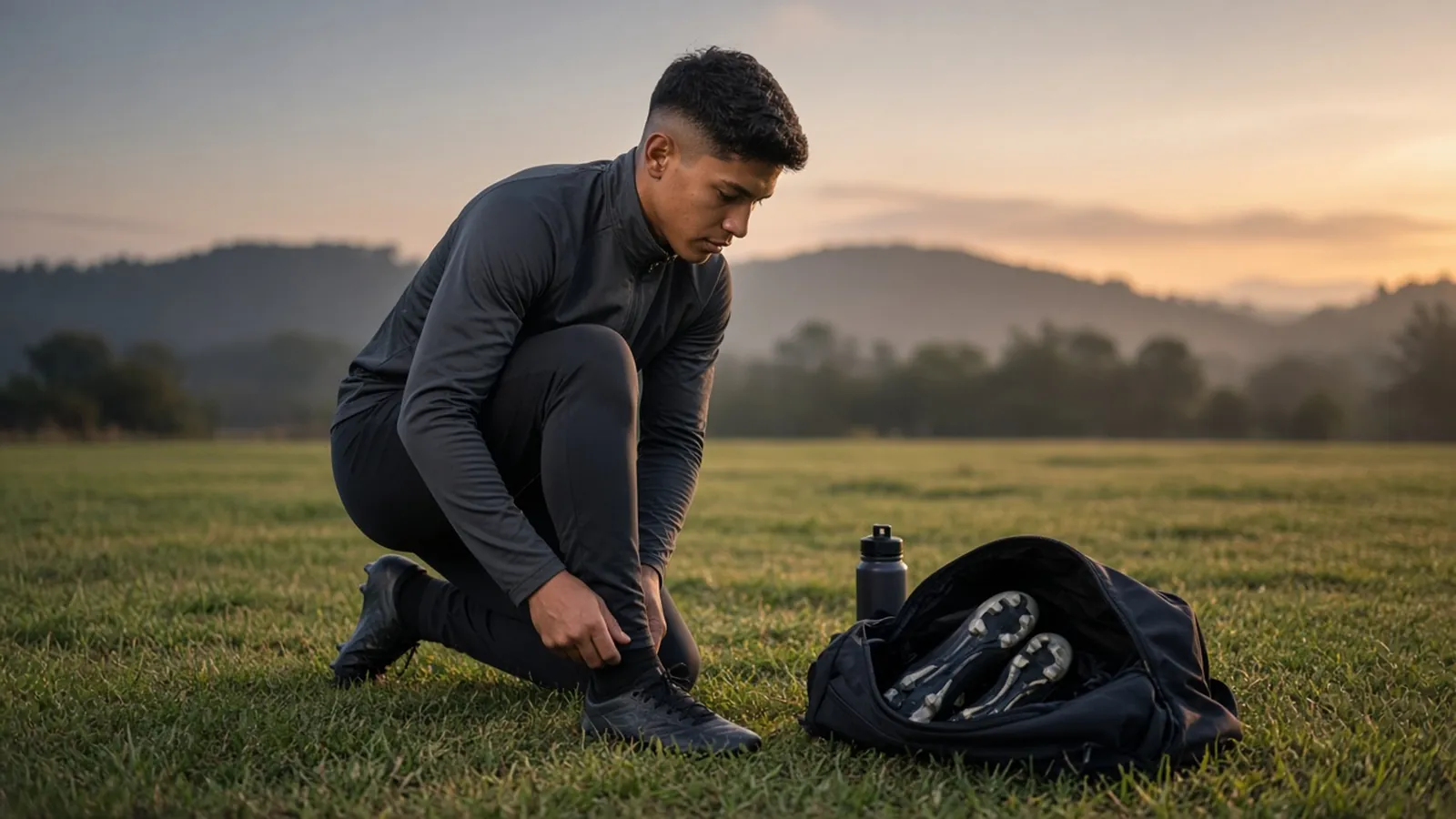
Preparing for a soccer trial / tryout day is not “smash a brutal session the night before.” It is showing up fresh, organised, and playing your real game — not a forced highlight-reel version.
This guide is for athletes 18+. It does not guarantee selection or a contract. If the player is under 18, a legal guardian leads logistics and club contact; on the sideline, fewer instructions and more calm.
This is distinct from how to get / request a trial (kit, email, trial types). Here the focus is the week before, the bag, arrival, and on-pitch conduct. For the request and pre-trial kit, see the sibling guide when live; useful video craft: soccer highlight video. Written package if asked: athlete resume.
The week before (no crash sessions)
- Keep normal training. Doubling load in the final week usually means heavy legs, not new talent.
- Prioritise sleep (especially the two nights before, not only the night of).
- Keep food and hydration normal — no experimental diet on game day.
- Confirm venue, time, surface (grass / turf / indoor) and what the club asked for.
- Paperwork: some clubs ask for ID and/or a medical clearance — verify with the club; we do not invent a universal list.
Skip the “killer” session 48 hours out. A light touch or your team’s normal session is enough.
Bag checklist
- Boots / cleats suited to the surface (already broken in — do not debut new boots on trial day)
- Shin guards
- Water
- Spare socks
- Light jacket / warm layer
- Clean training kit
- Goalkeepers: gloves
- Usual medication if needed
- Familiar snack for afterward (optional)
Pack the night before. Confirm the route and travel time.
Arrival and warm-up
Aim to arrive 20–30 minutes before check-in (unless the club says otherwise): find the field, bathroom, registration, and a calm few touches. Arriving at kickoff creates avoidable stress; arriving an hour early to stare nervously rarely helps.
Warm up for real — do not walk from the car straight into the first drill. Early minutes shape first impressions.
During the evaluation: play your game
Staff usually watch (beyond the spectacular goal):
- First touch and simple decisions under pressure
- Work off the ball and recovery after a mistake
- Short, useful communication with teammates
- Listening to coaching instructions
- Fit in their system, not your social feed
Four reminders are enough:
- Get involved — offer, do not hide for fear of mistakes.
- Play the game in front of you — no forced tricks to “stand out.”
- After an error, reset immediately — the next action matters more than the miss.
- Listen and collaborate — coachability shows live.
If they ask you to play another position: yes, with an honest effort. You do not need to fake expertise; you do need to show you listen and adapt.
After the tryout
- Hydrate and eat something normal.
- A short, polite thank-you to the club contact if the context allows (not a speech).
- Ask when they usually communicate (if they did not say) and write it down.
- If that date passes: one polite email asking for status. Not a daily ping.
- No outcome is guaranteed: offer, second session, waitlist, or “not this time” all exist. The day also helps you evaluate the club’s environment.
What a session often looks like (formats vary)
There is no single script. Many tryouts mix:
- Check-in / bibs / brief
- Staff-led warm-up
- Technical or small-sided work
- Games (small-sided or larger pitch)
Ask for clarity on arrival if it was not given: how many sessions? who evaluates? when do they communicate? One clear question to staff at the start is enough — do not interrupt every two minutes.
Common trial-day mistakes
- Crash session or new boots the night before
- Arriving late or without shin guards / water
- Forcing low-percentage tricks and shots to “be seen”
- Complaining about the referee, teammates, or surface
- Total silence on the pitch — or constant noise without purpose
- Adults coaching every touch from the sideline
- Inventing paperwork requirements “because the internet said so” without checking the club
- Believing a good highlight replaces live fitness and attitude
Practical checklist (no guarantees)
- Normal-load week + sleep
- Surface and time confirmed
- Full bag (correct boots, shin guards, water, layer, spare socks; GK: gloves)
- Documents only if the club asked (verify)
- Arrive 20–30 min early + warm-up
- Your game, communication, post-error reset
- One polite follow-up if needed — no spam
FAQ
Does ath.bio guarantee selection? No. It is a profile for sharing video and career. The club evaluates. Creating a profile does not guarantee a place.
New boots on trial day? No. Wear broken-in footwear suited to the surface. New boots distract and can blister.
Is this the same as “how to get a soccer trial”? No. That sibling piece (when live) covers trial types, kit, and the email to request one. This covers day-of prep and conduct.
Where do I keep materials if they ask? Living profile + highlight. Example: alexander-barboza. Catalog: /en/athletes.